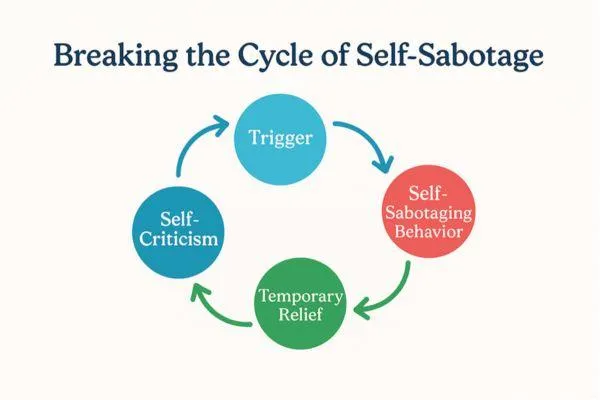
How to Use Mindful Awareness to Break the Cycle of Self-Sabotage

We all know what self-sabotage feels like. It’s that inner resistance that shows up just as we're about to take a meaningful step forward. It looks like skipping the meditation we promised ourselves, ghosting the gym after one empowering visit, or procrastinating on a project we deeply care about.
But even if it shows up like that, our mind is not against us. In fact, a part of it—our limbic system—is wired for survival. Its job is to keep us safe from perceived danger, which includes emotional risk, uncertainty, or vulnerability. So when we’re on the edge of change, it whispers:
“Don’t do it. Go back.”
It nudges us toward familiar comfort:
This protective pattern isn’t malicious—it’s just outdated. And recognizing it is the first step to choosing something new. Self-sabotage isn't evidence of failure; it's often a sign that we're moving closer to something meaningful.
🔎 What Is Self-Sabotage, Really?
Self-sabotage isn’t laziness or a lack of discipline. It’s an unconscious protective mechanism. Part of us fears change, even when change is good. Behind every self-sabotaging behavior is a story we’ve told ourselves:
These beliefs often formed in moments when we felt small or unseen, sometimes in childhood. But while they may have shaped our past, they don’t have to keep writing our future.
🌸 Mindful Awareness: The Game Changer
Mindfulness doesn’t erase self-sabotage. It helps us meet it with compassion. It’s the gentle pause that allows us to say:
Instead of reacting automatically, we respond with care. And in that space, transformation begins.
💫 Practical Mindful Steps to Interrupt the Pattern
🌀 Step 1: Notice the Impulse
Tune in before the behavior kicks in. Emotional awareness opens the doorway to choice.
Ask: What’s triggering me right now—fear, shame, overwhelm, perfectionism?
Example: You're reaching for your phone to scroll instead of working on a project. Pause: What excuse is your mind offering? "I’m tired," "I’ll do it tomorrow," "It won’t be good enough anyway."
🫶 Step 2: Take a Mindful Pause
Step back from your racing thoughts like a gentle observer. You're not fixing or analyzing—just noticing.
Practice:
Example: You’re prepping a presentation video. Doubt creeps in: What if nobody likes it? Pause, breathe, and script just one sentence. Don’t wait for confidence, start with care.
💖 Step 3: Redirect with a Loving Intention
Move gently but with purpose toward alignment.
Try:
Example: You planned to walk for an hour, but now feel drained. Rather than abandoning the walk, choose a 15-minute stroll. Connection, not perfection.
✨ Step 4: Reflect Without Judgment
Make evening reflection a ritual of self-kindness.
Ask:
Practice: Sit quietly. Journal:
“I showed up for myself in a small but powerful way. Tomorrow, I will…”
Every time we choose presence over autopilot, change takes root. The inner critic grows quieter. Our habits shift—not from pressure, but from friendship with ourselves.
Self-sabotage may still visit—but now, you’ll greet it differently.
With breath. With insight. With love. And with new tools to embrace transformation.

